
Clean energy advice for Florida homes, from a state that gets the sun and the storms
Sun is the easy part in Florida. The roof under the panels, the utility on the meter, and the county issuing the permit are what decide whether solar pays.
Florida homes run their heaviest loads for the longest stretch of the year. Cooling carries the bill from April into October, pool pumps and dehumidification run alongside it, and the afternoon peak lands squarely when a south-facing array is producing. That overlap is why solar tends to offset a larger share of a Florida bill than the same system would further north.
Our job is the part that comes before anyone quotes you: reading your usage, your roof, your utility’s terms and your county’s process, then telling you plainly what makes sense and in what order.
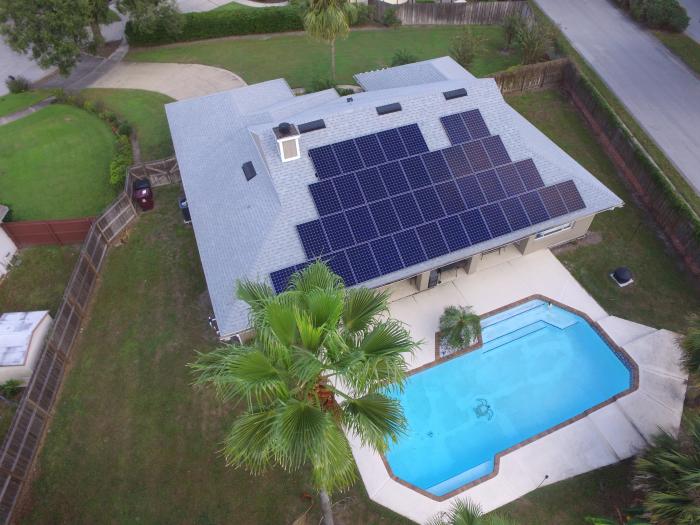
Florida at a glance
Full-retail net metering
Florida’s investor-owned utilities still credit exported power at the retail rate.
No state sales tax
Solar energy system equipment is exempt from Florida sales and use tax.
No added property tax
The value a residential system adds is excluded from your assessed value.
Five-day permits
Florida’s 2025 reform put a short clock on local solar approvals.
What changed for Florida homeowners on 1 January 2026
The federal residential clean energy credit under Section 25D — the one most homeowners knew as the 30% solar credit — ended for systems placed in service after 31 December 2025. It did not step down gradually; it stopped. A Florida homeowner who buys a system outright in 2026 does not claim that credit.
What did not change is the third-party route. Where a system is owned by someone else under a lease or power purchase agreement, the owner claims the commercial credit and typically reflects it in the rate you pay. That single difference has turned buying-versus-leasing from a preference into arithmetic.
Buying outright versus lease or PPA, in Florida, from 2026
| Buy outright | Lease or PPA | |
|---|---|---|
| Federal credit | Not available from 2026 | Claimed by the system owner |
| Who owns it | You do | The provider |
| Florida sales tax | Equipment exempt | Equipment exempt |
| Added property tax | Excluded by statute | Not your asset |
| Net metering credits | Yours | Usually reflected in your rate |

Florida’s own incentives are quieter, and they did not go anywhere
Florida has never run a large statewide cash rebate for residential solar, which surprises people who associate the Sunshine State with aggressive solar policy. What it has instead are two standing tax exemptions that quietly do a lot of work.
Solar energy systems are exempt from Florida sales and use tax, so the equipment is not taxed at purchase. Separately, under Florida Statute 193.624, the value a residential renewable energy device adds to your home is excluded from your assessed value — authorised through the end of 2037, and applied by most county property appraisers without you filing anything.
Your utility decides more of the math than your roof does
FPL, Duke Energy Florida and Tampa Electric
Florida’s investor-owned utilities operate under the Public Service Commission’s interconnection rule, 25-6.065. Excess generation is credited at the retail rate, credits roll forward month to month, and the balance is trued up annually. A 2022 bill would have ended that for systems interconnected after 2023; it was vetoed that April, and the rule has stood unchanged since.
JEA, OUC, Lakeland Electric and the co-ops
Municipal utilities and electric cooperatives are not bound by that framework and set their own credit terms. Two neighbours twenty miles apart can be on completely different economics. Before we discuss system size with anyone, we confirm which utility is on the meter.
How large a system will they allow?
Sizing rules matter as much as credit rates. Florida Power & Light, for instance, expects a system not to be sized beyond roughly 115% of the home’s own consumption, which puts a ceiling on the “just build it bigger” instinct.

Roof first, panels second
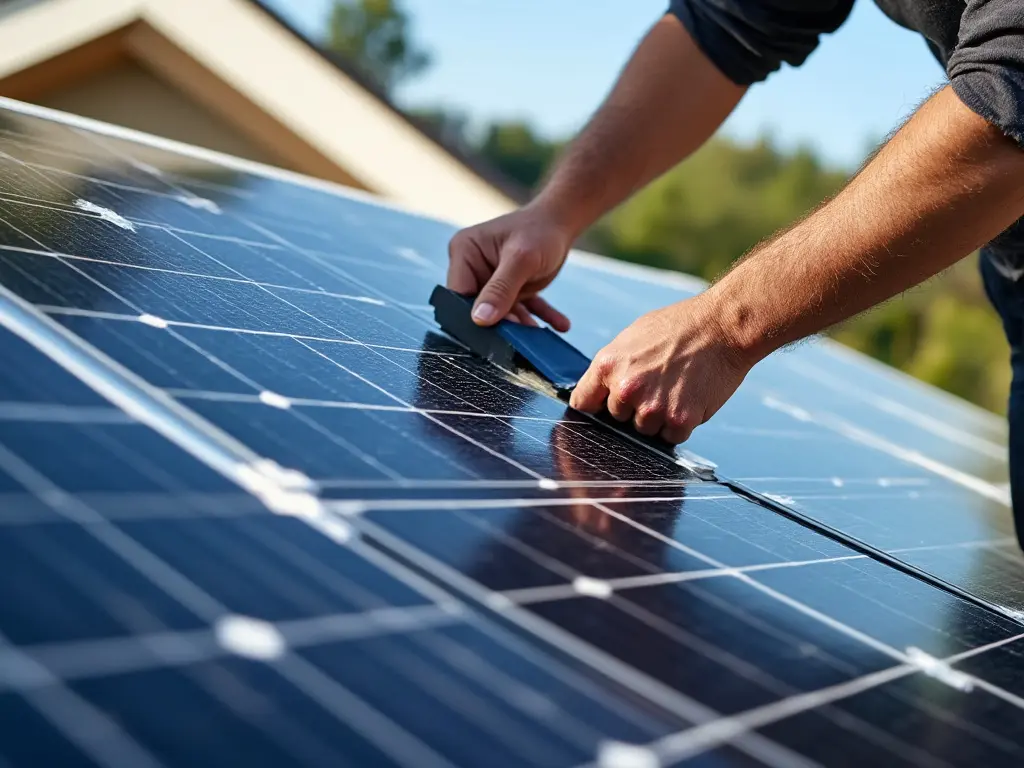
Roof age drives homeowners insurance in Florida, and a roof with a few years left is a poor foundation for equipment expected to run for decades. The order we recommend:
- Establish the roof’s real age — covering, condition, and how it came through the last storm season
- Line it up against your insurance — renewal terms often force the timing before you do
- Replace first if it is close — pairing a replacement with the array beats sequencing them apart
- Then design the system — on a roof that will outlive it
Permits and wind codes: what actually slows a Florida project
Permitting used to be the long pole. Florida’s 2025 reform put a short clock on it: a single-trade residential solar permit a local government does not act on within five business days is approved automatically, replacing the previous thirty-day window. In practice the bottleneck has moved to engineering and utility interconnection.
Wind is the Florida-specific constraint. In Miami-Dade and Broward — the High-Velocity Hurricane Zone — the rules are the strictest in the country. Mounting hardware there needs Florida Product Approval or a Miami-Dade Notice of Acceptance, and attachment spacing tightens near roof edges.
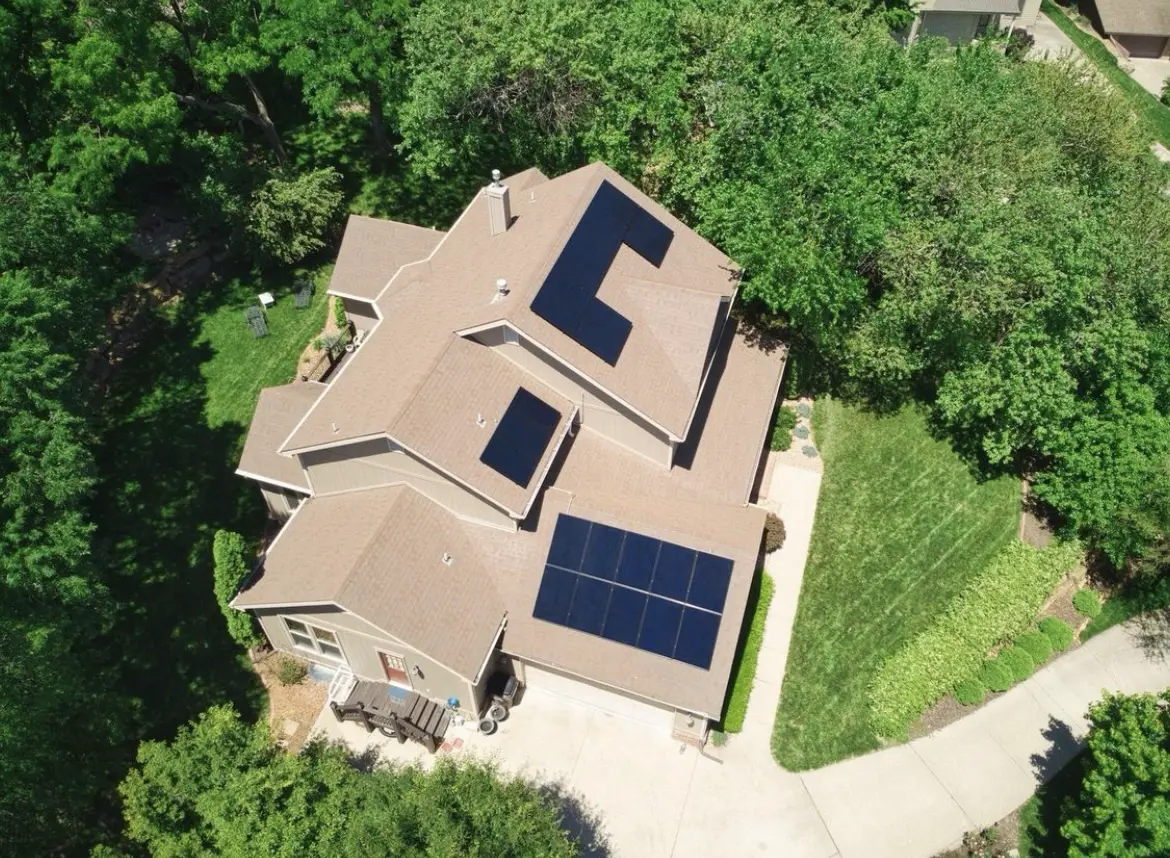
The services Florida homeowners ask us about most

Battery and storage
Hurricane season is why this comes up in almost every Florida conversation. Pair it with a SPAN panel and you choose in advance which circuits stay live. Explore storage
Roofs, pergolas and re-fits
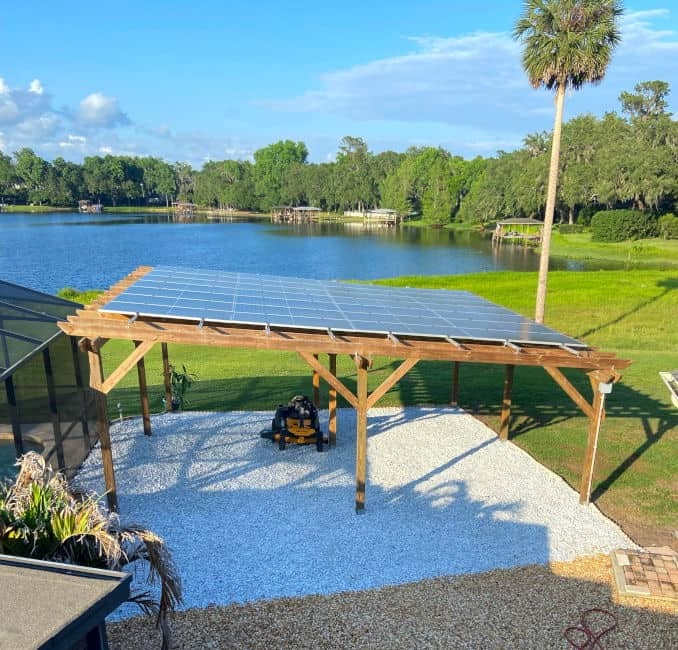
Where a roof cannot carry an array, a solar pergola shades a patio that wanted shade anyway. Where it needs work first, roof replacement and detach and reattach keep the sequence sane.
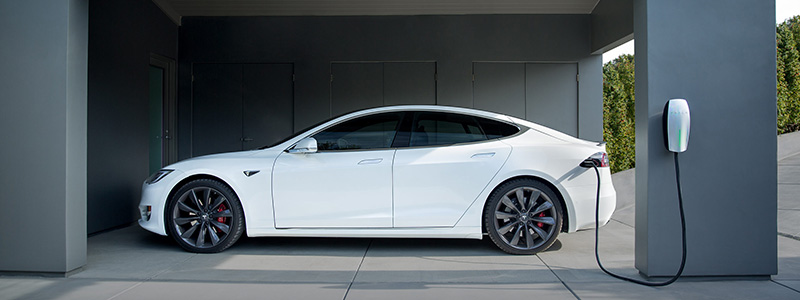
Charging and smart control
Shifting cooling and charging away from the afternoon peak is where a Florida home finds savings without losing comfort. Home EV charging and smart controls do that quietly.
Florida questions we hear most
Is solar still worth it in Florida now the federal credit has ended?
For many homes, yes — but the answer now turns on how you finance it rather than whether you install it. Full-retail net metering, the sales tax exemption and the property tax exclusion all remain, and third-party ownership still reaches the commercial credit.
Will panels survive a hurricane?
Properly engineered and permitted systems are designed to the same wind standards as the rest of your roof, and in Miami-Dade and Broward to a stricter one. The failures worth worrying about usually trace to attachment and roof condition rather than the panels themselves.
My neighbour gets a better rate for exported power. Why?
Almost always because they are on a different utility. Investor-owned utilities follow the Public Service Commission’s rule; municipal utilities and co-ops set their own terms. Confirming the meter is the first thing we do.
Should I replace my roof before adding solar?
If the roof has under about five to seven years left, usually yes. Doing it as one planned sequence avoids paying twice to handle the same array.
If you are weighing solar, storage or an efficiency upgrade anywhere in Florida, start with a conversation rather than a quote. Tell us your utility, your roof’s age and a recent bill, and we will tell you honestly what is worth doing and what is worth waiting on.