
Clean energy advice for Delaware homes, where a long summer’s solar credits now stay yours
Delaware rewrote its net metering law so that the credits your panels bank in a bright summer roll on into the next year, rather than reverting to the utility when the annual billing period closes.
For a stretch of recent years, any surplus left on a Delaware account at the end of its annual cycle simply went back to the electric company, unpaid. The General Assembly reversed that. State law now says excess kilowatt-hour credits carry over from one annual period to the next.
That one change reshapes how a Delaware system is best sized, and it sits beside a state grant funded through your own electric bill, an auction where Delmarva Power buys SRECs, and a state with no sales tax at all. Our advice is independent, so we can put those pieces together around your house rather than around a product.
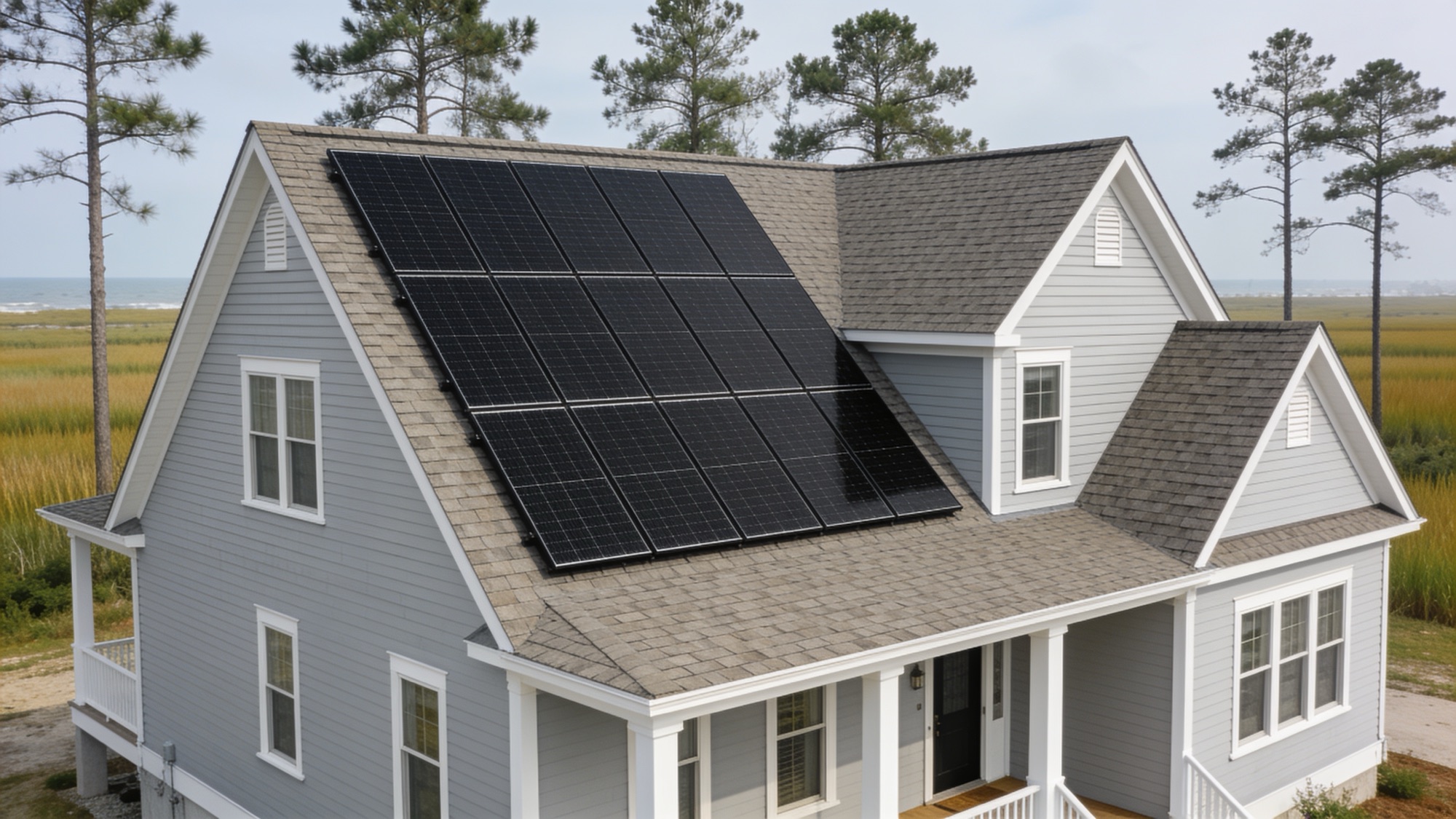
Four things that shape a Delaware decision
Credits that roll forward
Surplus kilowatt-hours carry into the following year instead of lapsing at the annual settlement.
A grant your bill pays for
Delmarva customers apply to the state Green Energy Program; Co-op members and town customers start with their own utility.
SRECs sold by auction
Delmarva buys solar credits through a yearly bid window, with multi-year contracts for winning bids.
No sales tax to plan around
Delaware has no state or local sales tax, so panels and batteries carry none at the register.
What the annual settlement means for you now
Every net-metered Delaware account runs on a twelve-month cycle. Within it, the surplus your system sends to the grid in one month is credited in kilowatt-hours and applied to later bills. The question that used to matter was what happened to the balance left over at the end, and for a while the answer was that the utility kept it.
Under the current statute, that balance carries over into the next annual period. The credits are valued against the per-kilowatt-hour parts of your supply and delivery charges rather than the fixed monthly customer charge, which is worth knowing when you read a bill. In practice it means a system sized for the heat pump or electric vehicle you plan to add next year is no longer penalised for running ahead of you this year.
Delaware’s three kinds of electric company
| Delmarva Power | Delaware Electric Cooperative | Municipal utility | |
|---|---|---|---|
| Who it serves | Most of New Castle County and parts of Kent and Sussex | Member-owners across much of Kent and Sussex | Customers inside nine member towns |
| Home system size for net metering | Up to twenty-five kilowatts | Up to twenty-five kilowatts | Up to twenty-five kilowatts |
| Where to start on a solar grant | DNREC’s Green Energy Program | The Co-op | Your town’s utility office |
| State battery rebate pilot | Eligible | Not part of the pilot | Not part of the pilot |

Selling SRECs here means placing a bid
Delaware’s renewable portfolio standard carries a solar requirement that rises through 2035, and Delmarva Power meets it by buying Solar Renewable Energy Certificates. Rather than a posted price, it buys them through SREC Delaware, a procurement run by Energize Delaware with at least one bid window each year. Homeowners or their installer name the price they will accept, and the lowest bids in each tier win multi-year contracts.
There is a trade-off to weigh before you bid. The state Green Energy Program grant asks you to sign your SRECs over to the Delaware Sustainable Energy Utility, so the grant and an SREC contract are usually a choice rather than a stack. Which one serves you better depends on system size and timing, and we will run both for your roof.
Who delivers your power decides most of the paperwork
Delmarva Power
Delaware’s only investor-owned electric utility handles interconnection and net metering for most homes in the north of the state and many further south. Its customers fund, and can apply to, the DNREC Green Energy Program, and they are the only Delawareans eligible for the state’s solar-plus-storage battery pilot. Delmarva’s default supply rate rose again in June, which is part of why more households are asking us to look.
Delaware Electric Cooperative
The Co-op is owned by the members it serves across Kent and Sussex counties. Residential members can net meter systems up to the same size limit as Delmarva customers. Grant support for members has its own route and rules, which have changed in recent years, so we confirm the current path for your account rather than assume it matches Delmarva’s.
Newark, Dover, Lewes, Milford and the other municipal towns
Nine Delaware towns run their own electric departments and buy power together through the Delaware Municipal Electric Corporation: Newark, New Castle, Middletown, Smyrna, Clayton, Dover, Milford, Seaford and Lewes. Net metering applies to their residential customers too. Grant support varies from town to town, so the first step is a quick check with your own utility office.


How a Delaware project comes together
Delaware’s grant has a few steps that have to happen in order. The sequence we follow:
- Name your electric company — Delmarva, the Co-op or a town utility each route you to a different grant
- Book the energy audit — the Green Energy Program expects one before an application is submitted
- Choose grant or SREC contract — signing credits over for the grant changes what you can bid later
- Apply soon after installation — the grant has a filing window, and approved payments can queue
From the Brandywine Valley to the beach towns
Delaware is small, flat and bright, which suits solar well. Up north, around Wilmington and Hockessin, the design work is mostly about mature trees on older lots and steeper roofs on stone and brick houses, and a good layout makes the most of the open faces.
In Sussex County the sea air and the wind off the Atlantic and the Bay shape the hardware rather than the decision. Around Lewes, Rehoboth and Bethany we specify corrosion-resistant fittings and attachment rated for coastal gusts, so the array is built for where it sits from the first day.
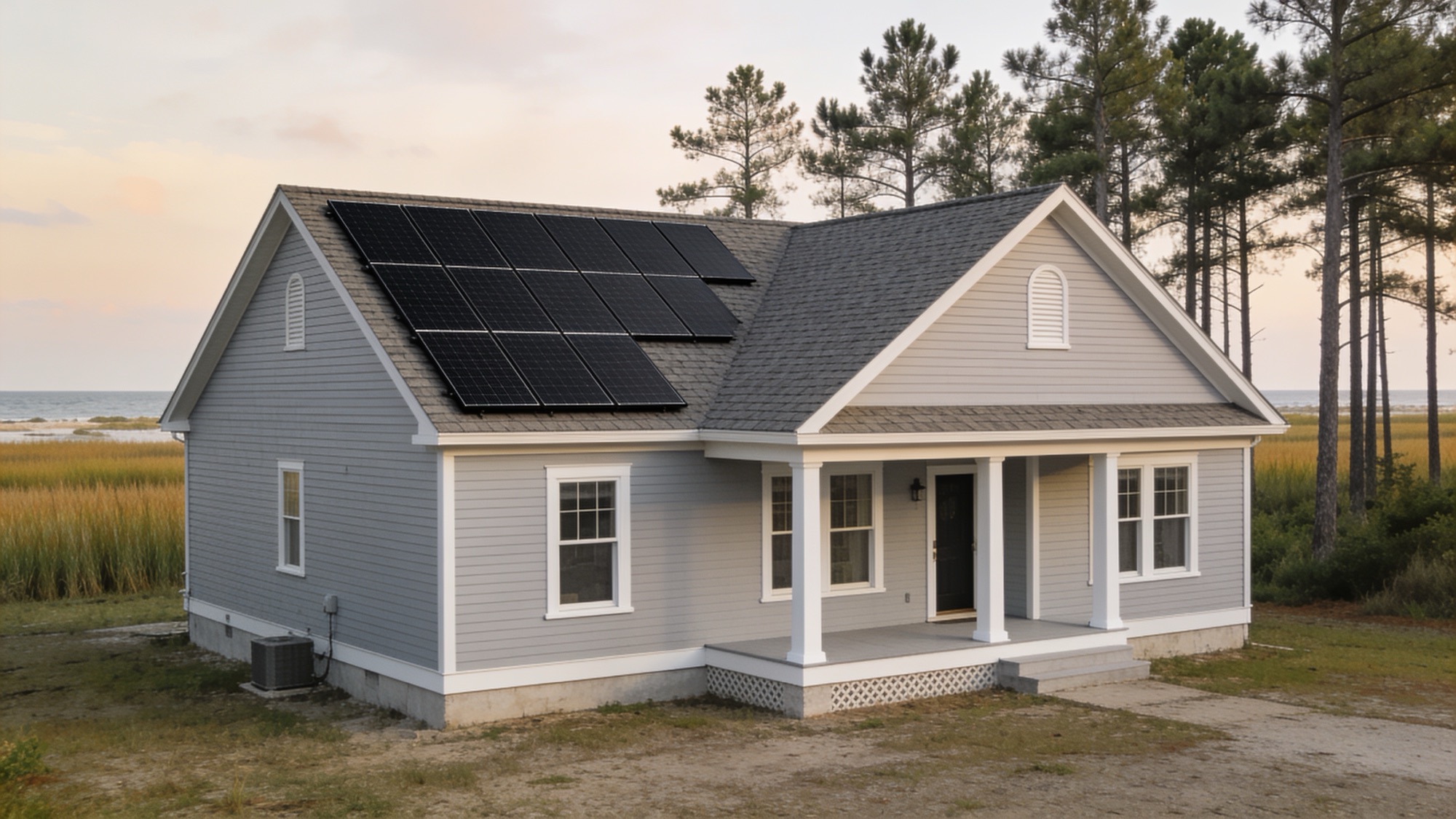
The services Delaware homeowners ask us about most

Battery and backup
Summer thunderstorms and coastal storms both test the lines here. Delmarva customers can also look at the state battery pilot. Explore storage

Roofs and arrays
A roof with years left in it is the best base for twenty-plus years of panels. We plan energy-efficient roof replacement alongside the array, and detach and reattach for existing systems.

Charging and control
Credits that roll forward make room for the car you have not bought yet. Home EV charging and smart home controls help you use your own generation well.
What Delaware homeowners want to know
Do my unused solar credits disappear at the end of the year?
Not under current Delaware law. Excess kilowatt-hour credits left at the end of your annual billing period carry over into the next one. The utilities are updating their billing systems to match, so we look at how your own account is handling it when we review a bill.
Can my homeowners association stop me from installing solar?
Delaware law voids covenants that ban rooftop solar on a single-family home whose roof you own outright. An association can still set reasonable conditions, as long as they do not significantly raise the cost or cut the system’s performance. Roofs held as common property are treated differently.
Is there a state rebate for a home battery?
DNREC runs a solar-plus-storage pilot through the Green Energy Program that pays toward a battery installed with solar, for Delmarva Power customers who own the system. We confirm its current terms and funding at the time you apply rather than quoting them from memory.
Do I pay sales tax on solar equipment in Delaware?
No. Delaware has no state or local sales tax, so there is nothing to claim or file for panels, inverters or batteries bought for your home.
If you are thinking about solar, storage or an efficiency upgrade anywhere in Delaware, tell us who delivers your power, the county you live in and roughly what you pay each month. We will show you which grant and SREC route fits your home and how far your credits will carry.